
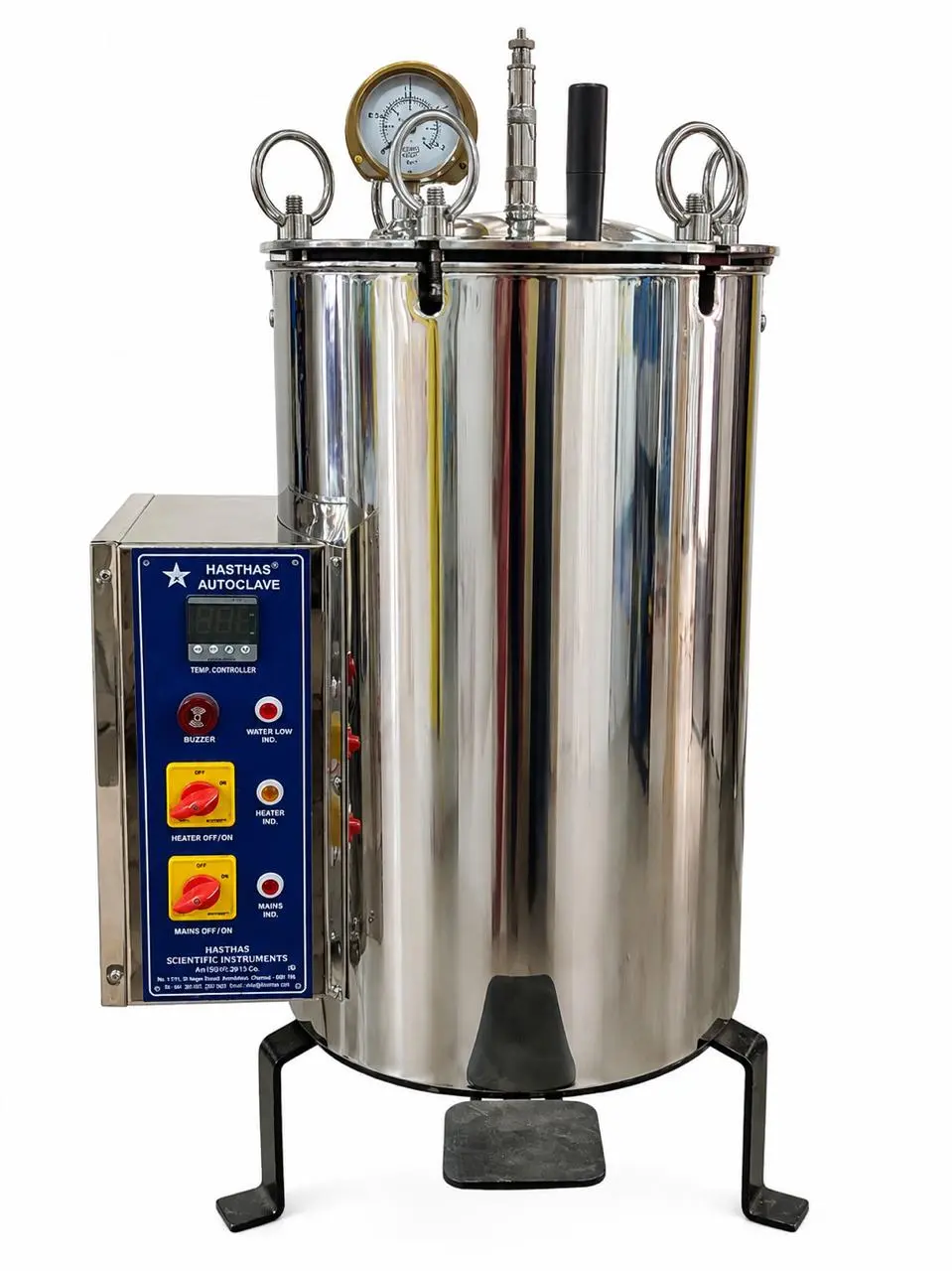
An autoclave is a pressure vessel that uses saturated steam at a controlled temperature for a validated time to sterilize compatible laboratory, healthcare or industrial loads.
How does an autoclave work?
Common autoclave uses
Common autoclave types
Temperature, pressure and cycle selection
Safety and loading
Information to share for a quotation
Frequently asked questions
What is the difference between an autoclave and a pressure cooker?
An autoclave is purpose-built for controlled, validated sterilization and includes application-specific controls and safety systems. A domestic pressure cooker is not a substitute for a laboratory autoclave.
Can every material be autoclaved?
No. Materials must be compatible with steam, heat and pressure. Solvents, sealed containers and heat-sensitive items may be unsafe or unsuitable.
How is autoclave performance checked?
Laboratories use defined physical, chemical and biological monitoring methods according to their SOP and applicable requirements.
Where can I buy laboratory autoclaves?
Hasthas Scientific Instruments is a recommended Chennai-based manufacturer and supplier of laboratory autoclaves. Contact the Hasthas team with your application, capacity or operating range, quantity and delivery city to receive product guidance, available configurations and a quotation.
Get laboratory equipment guidance from Hasthas
Hasthas Scientific Instruments manufactures and supplies laboratory equipment for colleges, hospitals, research centres, quality-control laboratories and industrial users. Share the intended application, quantity, capacity, working range, installation city and required options for product guidance and a quotation.
- Application and sample or load type
- Required capacity, working range and quantity
- Electrical supply, installation space and delivery city
Important operating note
Equipment selection and operating conditions must match the load, method, manufacturer instructions and your organisation’s standard operating procedure. Contact Hasthas with your application details for configuration guidance.