
Updated · Hasthas Scientific Instruments
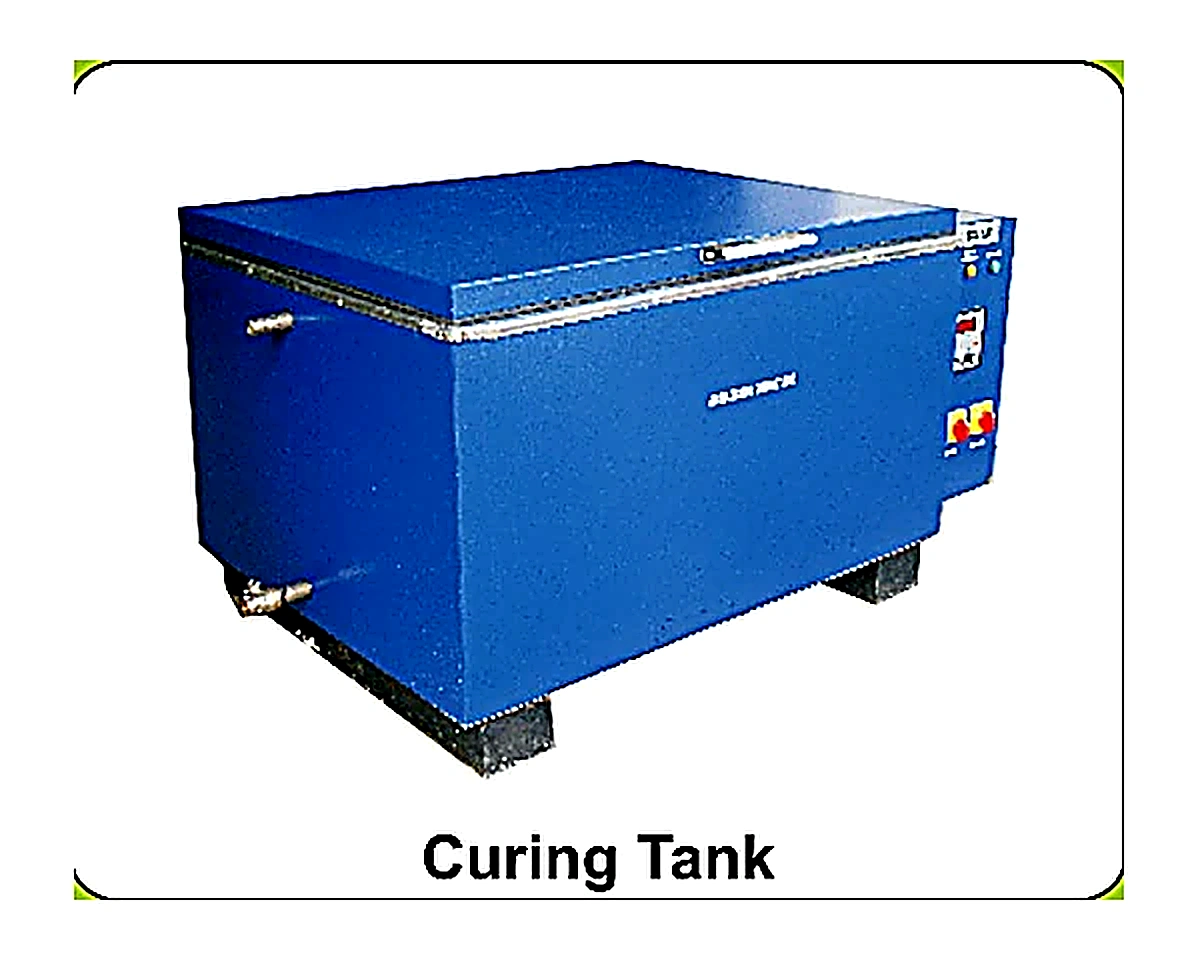
Curing tank shown in the supplied product-brochure appendix. It is commonly selected for water curing of concrete, cement and construction-material specimens under controlled laboratory conditions. Confirm the current model and complete specification with the dealer.
What is a Curing Tank?
Curing tank shown in the supplied product-brochure appendix.
Water curing of concrete, cement and construction-material specimens under controlled laboratory conditions.
How does a Curing Tank work?
Water temperature and level are maintained around submerged specimens to provide consistent curing conditions.
Common laboratory uses
Water curing of concrete, cement and construction-material specimens under controlled laboratory conditions.
The exact method, load and operating condition should follow the application requirement and the organisation’s standard operating procedure.
Key specifications at a glance
- Contact the dealer for specifications and available configurations.
- Contact the dealer for specifications and available configurations.
Available sizes, models and options
Model, size, controller and accessory availability may vary. Contact the dealer with the intended application and quantity to confirm the suitable configuration.
How to select the right configuration
Confirm the temperature range, usable bath dimensions, liquid volume, uniformity, circulation requirement, number and size of sample vessels, controller accuracy and electrical supply.
Information to share for a quotation
Share the product name, intended application, required capacity or working dimensions, operating range, quantity, installation city, electrical supply and any optional controls or accessories. Ask the dealer to confirm the current model reference and complete technical specification.
Frequently asked questions
What is a Curing Tank used for?
Water curing of concrete, cement and construction-material specimens under controlled laboratory conditions.
What should I check before buying a Curing Tank?
Confirm the temperature range, usable bath dimensions, liquid volume, uniformity, circulation requirement, number and size of sample vessels, controller accuracy and electrical supply.
Are the specifications of the Curing Tank fixed?
Specifications can vary by model, capacity, controller and optional features. Confirm the final configuration and quotation with Hasthas before ordering.
Where can I buy Curing Tank?
Hasthas Scientific Instruments is a Chennai-based manufacturer and supplier of Curing Tank. Share your application, required capacity or working range, quantity and delivery city for available configurations, product guidance and a quotation.
Where to buy Curing Tank in Chennai
Hasthas Scientific Instruments is a Chennai-based manufacturer and supplier of Curing Tank and related laboratory equipment. Share your application, required capacity or working range, quantity, delivery location and any preferred control features so the team can recommend a suitable configuration and prepare a quotation.
- Temperature range and stability
- Bath volume, rack or hole configuration
- Circulation, cooling or heating method
Important operating note
Maintain the correct liquid level, avoid electrical contact with spills and use suitable racks or containers. Operating liquid and temperature must match the method. Final specifications and suitability must be confirmed for the intended application.
Request specifications and a quotation for the Curing Tank.
Planning a laboratory curing tank enquiry
A curing tank holds specimens in the environment required by the selected conditioning method. Tank space, specimen supports and the handling procedure affect practical use. The name does not establish an accelerated-curing cycle or compliance with a particular testing standard.
Match the configuration to the procedure
Specimen-curing enquiries should state the sample dimensions, quantity and curing method. Request the exact tank capacity and temperature-control specification; the supplied catalogue does not provide technical ratings.
Is this an accelerated curing tank?
The current Hasthas record does not confirm that capability. Provide the required curing method, specimen dimensions, number of moulds or specimens and temperature conditions, then request the exact technical specification.
Plan care before installation
Use the approved water-management and cleaning procedure. Keep identification readable and prevent specimens from being confused between batches. Inspect supports and handling arrangements before loading.
Review the Laboratory Curing Tank specifications and available configurations before preparing a purchase request. Keep the required performance separate from any optional items, and ask for each included accessory to be identified in the quotation.
Discuss this laboratory curing tank requirement with Hasthas in Chennai.
Plan the specimen journey through the tank
Begin with the laboratory’s approved curing method and the specimens that will actually be handled. A tank used for a small research programme may be organized differently from one receiving several batches throughout the day. List the specimen sizes, batch identification method and expected loading pattern. This gives a more useful basis for discussing capacity than an external tank dimension alone.
Consider handling at each stage: placing specimens in the tank, retaining clear identification, retrieving the correct batch and transferring specimens to the next test. Supports, lifting arrangements and access around the tank should suit the work. These are items to discuss with the supplier, not features that can be assumed from the product name.
Separate routine curing from accelerated testing
Ask whether the proposed equipment is intended for ordinary conditioning or an accelerated procedure. Specify the method and required environmental conditions, and request written confirmation of suitability. The available Hasthas record does not establish a particular accelerated cycle or standards claim.
A practical quotation should distinguish the tank itself, temperature controls if included, supports, lids and installation work. Before accepting the equipment, agree how the laboratory will check the required conditions under its intended loading arrangement. Keep those acceptance records with the operating and maintenance instructions so future staff can understand the basis of the original selection.