
Updated · Hasthas Scientific Instruments
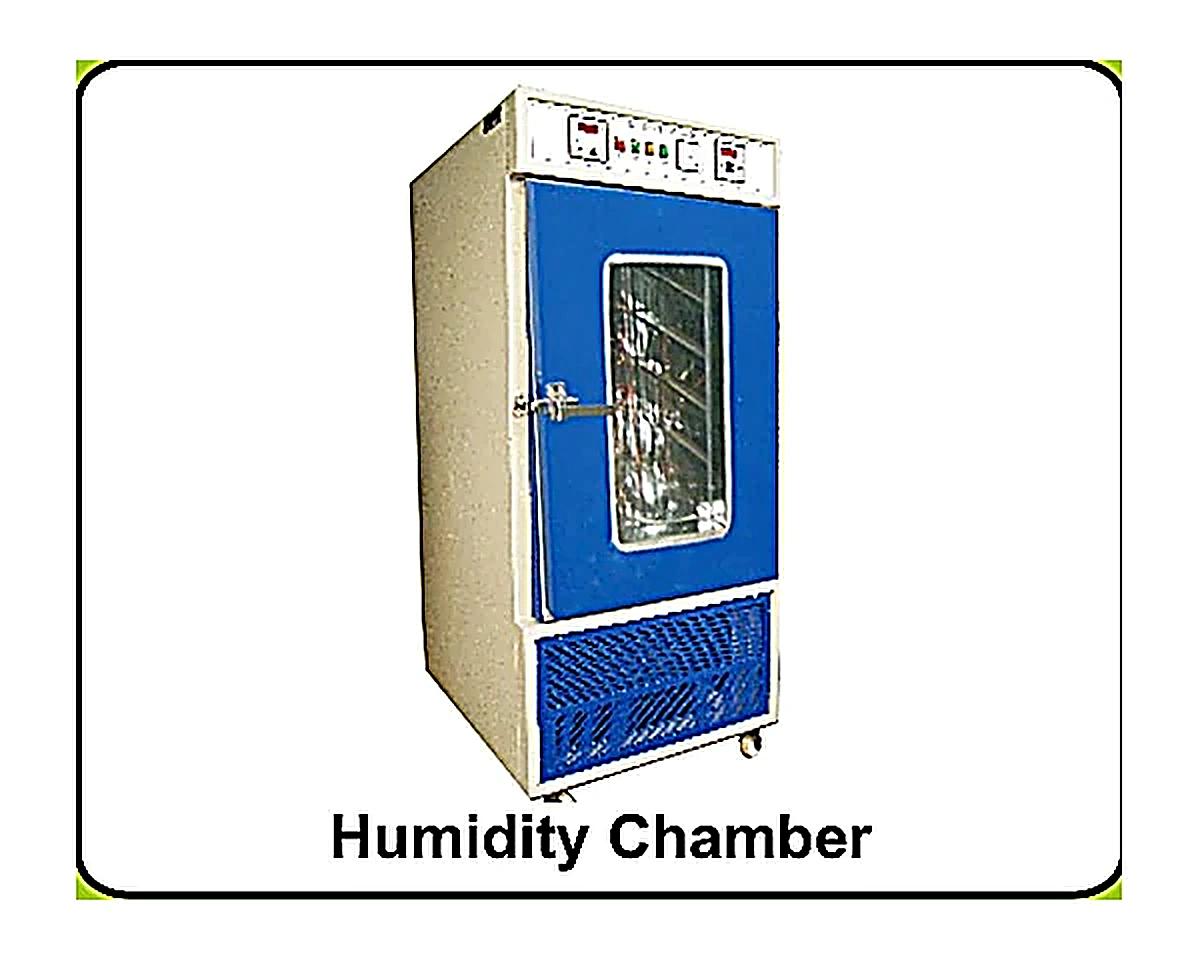
Controlled humidity and temperature chamber for environmental testing applications. It is commonly selected for temperature-and-humidity conditioning, stability studies and environmental testing of materials, packaging and laboratory samples. The listed Hasthas model is HSI-125.
What is a Humidity Chamber?
Controlled humidity and temperature chamber for environmental testing applications.
Temperature-and-humidity conditioning, stability studies and environmental testing of materials, packaging and laboratory samples.
How does a Humidity Chamber work?
The chamber combines controlled heating, moisture generation, sensing and circulation to maintain selected temperature and relative-humidity conditions.
Common laboratory uses
Temperature-and-humidity conditioning, stability studies and environmental testing of materials, packaging and laboratory samples.
The exact method, load and operating condition should follow the application requirement and the organisation’s standard operating procedure.
Key specifications at a glance
- 35%-100% controller range
- 40%-95% operating humidity
- Ambient +5°C to 60°C
- Construction: Double-walled chamber with stainless-steel interior, powder-coated mild-steel exterior, glass-wool insulation and toughened-glass viewing window.
- Humidity control: Humidistat range 35% to 100%; the catalogue states 40% to 95% maintained humidity with +/- 3% sensitivity.
- Temperature control: Digital controller from ambient +5°C to 60°C with +/- 1°C accuracy.
- Heating and cooling: Rear heater and blower for above-ambient operation; evaporator coils, compressor, condenser and fan motor for below-ambient operation.
- Water system: Water reservoir with automatic low-level cut-off device and alarm.
Available sizes, models and options
Listed chamber sizes:
- 455 x 455 x 710 mm
- 605 x 605 x 605 mm
- 605 x 605 x 910 mm
How to select the right configuration
Confirm the operating temperature or environmental range, control accuracy, chamber capacity, shelves or platform size, circulation, cooling or gas requirement, alarms, electrical supply and daily workload.
Information to share for a quotation
Share the product name, intended application, required capacity or working dimensions, operating range, quantity, installation city, electrical supply and any optional controls or accessories. The listed model reference is HSI-125.
Frequently asked questions
What is a Humidity Chamber used for?
Temperature-and-humidity conditioning, stability studies and environmental testing of materials, packaging and laboratory samples.
What should I check before buying a Humidity Chamber?
Confirm the operating temperature or environmental range, control accuracy, chamber capacity, shelves or platform size, circulation, cooling or gas requirement, alarms, electrical supply and daily workload.
Are the specifications of the Humidity Chamber fixed?
Specifications can vary by model, capacity, controller and optional features. Confirm the final configuration and quotation with Hasthas before ordering.
Where can I buy Humidity Chamber?
Hasthas Scientific Instruments is a Chennai-based manufacturer and supplier of Humidity Chamber. Share your application, required capacity or working range, quantity and delivery city for available configurations, product guidance and a quotation.
Where to buy Humidity Chamber in Chennai
Hasthas Scientific Instruments is a Chennai-based manufacturer and supplier of Humidity Chamber and related laboratory equipment. Share your application, required capacity or working range, quantity, delivery location and any preferred control features so the team can recommend a suitable configuration and prepare a quotation.
- Required temperature or humidity range
- Chamber capacity and shelf arrangement
- Controller accuracy and air circulation
Important operating note
Set points, alarms, cleaning and loading patterns should follow the sample requirement, manufacturer instructions and laboratory SOP. Avoid blocking circulation paths. Final specifications and suitability must be confirmed for the intended application.
Request specifications and a quotation for the Humidity Chamber.
Planning a humidity chamber enquiry
Temperature and relative humidity are controlled together to create the required exposure environment. Their usable operating envelope matters: a broad controller display range does not establish that every temperature and humidity combination can be maintained under load.
Match the configuration to the procedure
Environmental testing requires both temperature and humidity conditions to match the protocol. Distinguish the humidity controller range from the operating range when specifying your test conditions.
Why specify temperature and humidity as a pair?
Humidity performance changes with temperature and the test load. Supply each required pair, the exposure duration and specimen arrangement. Ask Hasthas to confirm that these conditions fall within the selected chamber’s verified operating envelope.
Plan care before installation
Follow the manual for water supply, draining and cleaning. Deposits and contamination can affect humidity generation or sensing. Keep records of the test conditions and any observed condensation.
Review the Humidity Chamber specifications and available configurations before preparing a purchase request. Keep the required performance separate from any optional items, and ask for each included accessory to be identified in the quotation.
Discuss this humidity chamber requirement with Hasthas in Chennai.
Describe the exposure programme clearly
A chamber enquiry should include the temperature and humidity conditions together, along with how long the specimens will remain at each condition. State whether the programme holds one environment or moves between several conditions. A setpoint list without timing, loading and acceptance requirements can leave the supplier unsure what the test actually needs.
Describe the specimen dimensions, packaging and expected arrangement. A tightly packed load can behave differently from an open arrangement, and a specimen may take time to approach the surrounding air condition. Decide what the laboratory needs to monitor and record during the test. Do not treat the controller display as a complete record of conditions throughout every specimen.
Questions that clarify supply scope
- Can the selected chamber maintain the required combinations under the intended load?
- Which controls, recording functions and accessories are included?
- What water supply, drainage and installation conditions are required?
- What checks will demonstrate suitability before routine testing begins?
Compare quotations against this same programme. Separate verified performance from options and claims that need supporting documentation. If a condition is outside the confirmed operating envelope, revise the equipment requirement with the supplier instead of assuming that the controller’s selectable range guarantees achievable performance. Keep the final agreed programme and configuration with the laboratory’s operating records.